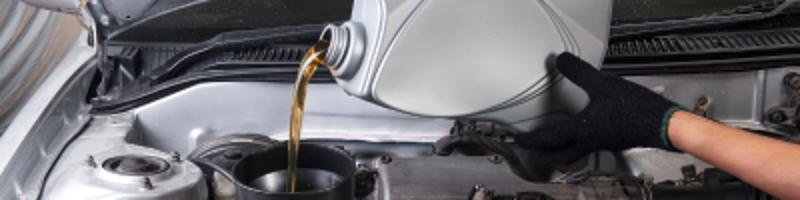
Reasons for increased oil consumption
There are two main causes of increased oil consumption: oil spillage and oil combustion. In the vast majority of cases, the source of the problem is an oil leakage due to a defect in a seal, a sealing ring or a connection point. Less spectacular, but at least as common, is when the engine oil does not leak, but enters the engine's combustion chamber and burns during operation.
This latter process typically occurs when piston rings, valve stem seal rings or turbochargers wear out or when internal engine components no longer seal properly. Oil is then carried through the intake or exhaust valves or past the piston into the combustion chamber, where it burns up with the fuel. The result is often bluish smoke from the exhaust and increased oil consumption even when there are no visible leaks in the engine.
Increased oil combustion not only leads to a faster drop in oil level, but can also cause long-term damage to the catalytic converter, increase emissions and cause deposits on valves, spark plugs and the exhaust system. That is why abnormally high oil consumption should never be ignored: thorough diagnostics are needed to identify the exact source of the fault and correct it as soon as possible.
Engine oil consumption rate
For each vehicle, the engine manufacturer precisely defines a so-called permissible oil consumption level, within which oil consumption is considered normal. Many motorists tend to think that a 'good engine' does not consume any oil at all, but the reality is different: all internal combustion engines have a certain natural oil consumption, even if this is not always apparent in everyday use.
For engines built around the turn of the millennium and before, manufacturers defined normal oil consumption as between 0.05% and 0.5% of fuel consumption. Based on an average fuel consumption of 8 litres, this means 0.4 to 4 decilitres of oil per 1000 kilometres.
Thanks to advances in modern manufacturing technology, today's engines are built with much more precise fits, thus reducing losses and natural oil consumption significantly. For engines currently in production, normal oil consumption is typically between 0.05 and 0.1% of fuel consumption, which, using the example above, is 0.4 to 0.8 decilitres of oil per 1000 kilometres.
If the vehicle's oil consumption is consistently above the manufacturer's limit, this may already indicate abnormal operation. This can be caused by, for example, a worn valve stem seal, ring wear, turbo failure or poor oil quality. In such cases, it is advisable to have the engine repaired as soon as possible, as excessive oil consumption can lead to more serious engine damage in the long term.
What is the relationship between the age of the engine and the causes of oil consumption?
Oil consumption is not a constant value, but varies throughout the life of the engine. A new engine has what is known as a running-in period, when internal components such as piston rings, cylinder walls, valve stem rings, etc. fit together and "click together". During this period, it may be normal for oil consumption to be temporarily higher than usual, as the engine components are not yet perfectly sealed. This is why most manufacturers recommend checking the oil level regularly during the first 1 500-3 000 kilometres and topping up the engine oil if necessary.
As the run-in period comes to an end, the engine components will be optimally aligned and oil consumption will gradually return to normal. This can be considered a "healthy" stage in the engine's life, when oil consumption is low and stable. However, as the engine ages, depending on the intensity of use and the quality of maintenance, wear reappears and seals, rings, valves and other components lose efficiency.
As the engine nears the end of its life, oil consumption starts to increase again gradually. This increased consumption is now typically due to mechanical causes such as wear on piston rings or valve stem sealing rings, cylinder wear or increased internal clearances. In such cases, more oil enters the combustion chamber where it burns up or leaks past the seals, which can reduce engine performance and increase emissions in the longer term.
Regularly checking the condition of the engine and monitoring oil consumption is therefore not only important for lubricant replenishment, but can also give an early indication of engine wear, allowing preventive maintenance and avoiding major breakdowns.
what can cause an engine to burn more engine oil than normal?
Increased oil consumption is not only caused by the natural ageing of the engine. There are many other factors that can affect how much oil an engine uses in its daily operation. There are several of these that can be relatively easily influenced by changing usage habits or maintenance.
One of the most common factors is more difficult operating conditions. If the vehicle is regularly used under heavy loads - for example, towing a trailer, driving in a sporty style or idling a lot - this means increased heat load and greater stress on the engine. This in itself can increase oil consumption.
The viscosity of the engine oil you use also plays an important role. Switching to a lower viscosity oil than you are used to - for example, filling the engine with 5W-30 or 0W-30 instead of 5W-40 - can result in more oil leaking or burning through internal gaps. This is not necessarily a fault, but a result of the physical properties of the lubricant, but for many motorists the change may come as a surprise.
The quality of the engine oil is also key. Cheaper, lower-quality lubricants typically have higher evaporative losses than premium oils, even with the same viscosity rating. This is particularly true for modern, low viscosity oils, where evaporation is a natural feature. If the engine oil evaporates faster, this can cause a noticeable drop in oil level in a short time.
Too long oil change intervals are also a common problem. In modern engines, oil is diluted with fuel over time, which reduces the viscosity of the lubricant. If you wait too long before changing the oil, the diluted oil is less able to withstand the load and therefore runs out more quickly.
Running the vehicle at too low an oil level for an extended period of time is also a significant factor. In such cases, the engine oil is subject to increased thermal and mechanical stress, wears out more quickly, oxidises and loses its lubricating properties. This can not only lead to increased oil consumption, but also to a deterioration in the long-term condition of the engine.
Although these factors can often be easily controlled by changing usage habits or by selecting the right engine oil, the age of vehicles is the biggest problem due to the specificities of the Hungarian vehicle fleet. According to statistics, the average age of the Hungarian fleet is over 15 years, so the main cause of increased oil consumption is mostly mechanical deterioration due to natural wear and tear. This is not good for the engine's lifetime or for the environment, as oil combustion is also associated with increased emissions.
what is the real cause of excessive oil consumption in many cases?
The vehicles that make up the backbone of the Hungarian vehicle fleet generally came off the production line between 2000 and 2010 and have been on the road ever since. In that time, even in normal use, an average car will have covered at least 200-250,000 km, but it is not uncommon to see 300-400,000 km.
With this mileage, the most important factor determining the current condition of an engine is the presence or absence of regular maintenance throughout the life of the vehicle. The condition of the vehicle and engine depends almost entirely on how the owners have used the vehicles, how often they have carried out regular maintenance and the quality of lubricants and parts used over their lifetime.
Choosing an inappropriate oil change interval or using low-quality engine oil can lead to the formation of deposits in the engine, a consequent increase in oil consumption and even abnormal wear of engine components.
From the point of view of use, it is the oil consumption rate of 2-3 dl per 1000 km that is noticeable and disturbing (and still within the normal limit). At this rate, even at a 10 000 km oil change interval, the total oil between the maximum and minimum levels of the oil nozzle will be used up at least once, making it necessary to check the engine oil level more frequently than usual and to top up regularly. At the upper end of the normal oil consumption limit, after just 2,000 km (which is 1 or 2 months of mileage for an average user), approximately 1 litre of engine oil should be topped up.
The majority of users are aware that the high oil consumption is due to the condition and wear rate of the engine as a result of its age and use. The cost of a complete overhaul of an engine often represents a significant part or in some cases all of the value of the vehicle, which is why owners often look for alternative solutions.
what solutions do users try instead of engine overhaul?
such solutions usually include the addition of special oil consumption-reducing additives to the engine oil, which promise to reduce oil consumption, or even switching to a higher viscosity engine oil than the manufacturer's prescribed viscosity when refilling the engine oil.
In practice, both are the same, because the engine oil additives that are intended to reduce oil consumption are not liquid car lubricants and are not able to eliminate engine wear, but are very dense and usually contain polymers that increase the viscosity of the oil when added to it.
looking at the short term, at the same operating temperature, higher viscosity engine oil will actually seal better due to a thicker oil film and thus in the short term you will see a reduction in engine oil consumption, but it will not prevent coke deposits or engine wear that develops over the years.
The bad news is that while this solution may treat the symptoms in the short term and seem to solve the problem, it will make it worse in the medium to long term.
In order to understand the problems that can be caused by using an engine oil with a higher viscosity than the manufacturer's specification, let's take a few sentences to explain what the engine oil does in the engine and look at the manufacturer's specification of the viscosity of the engine oil.
the main functions of engine oil during engine operation:
● Control friction between surfaces
● Reducing wear on engine components
● Controls the temperature of engine components
● Cleans the internal surfaces
● Controls the formation of deposits
● Protects metal surfaces from corrosion
● Neutralises acidic impurities generated during combustion
the viscosity of engine oil has a fundamental effect on friction control, thus preventing wear and the operating temperature of the engine.
how is the viscosity of engine oil in an engine determined?
the vehicle manufacturer determines the viscosity of the engine oil essentially in terms of the bearing clearance used in the manufacture of the engine, which is the minimum clearance that the engine oil must be able to pass through at operating temperature at the oil pressure specified by the manufacturer and be able to reduce friction on the bearing surfaces, prevent surface wear and, last but not least, remove heat from the surfaces due to friction between the surfaces.the best engine oils therefore meet the manufacturer's specifications, neither too low nor too high viscosity.
Why not deviate from the manufacturer's engine oil viscosity?
When thinking about which engine oil can help reduce oil consumption, many people automatically go for the higher viscosity oil. Indeed, there are advantages to using a thicker oil: it forms a thicker oil film that seals better on worn parts, so the engine lets less oil through to the combustion chamber. This can reduce fuel consumption in the short term, especially for older engines.
However, there are trade-offs in using higher viscosity engine oil. Denser oil has a harder time penetrating through narrow bearing clearances, so less oil reaches the lubrication points, especially during cold starts or heavy loads. In addition, thicker oil flows more slowly through the system and therefore dissipates heat less efficiently, which can lead to increased temperatures in internal engine components. Higher operating temperatures can lead to increased deposits, faster ageing of the engine oil and increased wear, which in the longer term can have the opposite effect to what you want.
In addition, higher viscosity engine oil also increases oil pressure, which can further increase the thermal load on the engine. Together, these can increase oil consumption in the medium to long term, while putting more stress on engine components.
Therefore, when choosing a higher viscosity engine oil or engine oil additive to reduce oil consumption, it is advisable to do so in a considered and measured way, taking into account the manufacturer's specifications. The permanent solution is usually not to 'up the viscosity' but to address the root cause of the increased oil consumption - for example, repairing or replacing worn parts.
Conclusion
The design engineer should always make a considered design decision on the viscosity of the engine oil and other requirements of the engine oil, as specified in the engine oil standards set by the manufacturer. Even with increased oil consumption, it is not recommended to deviate from these standards, as this risks poor engine performance, premature ageing and wear. The best engine oil is always the type specified by the manufacturer!
The entire lubricating and cooling system of the engine, the viscosity of the engine oil and the engine oil have all been designed and specified by the vehicle's engine designer to ensure that the engine can run properly over the entire rev range. Any changes made to it affect the engine as a whole.